
The Story
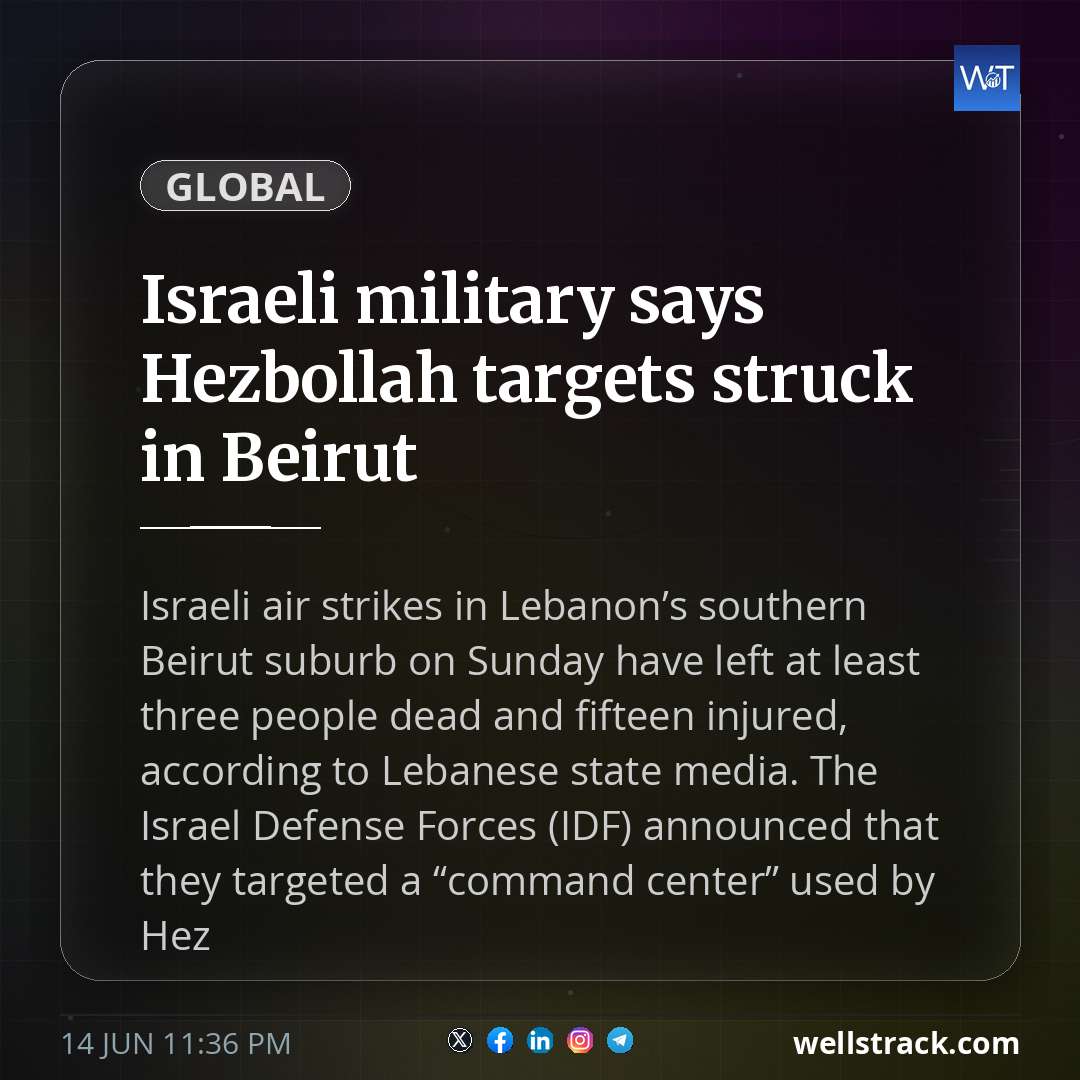
Israeli air strikes in Lebanon’s southern Beirut suburb on Sunday have left at least three people dead and fifteen injured, according to Lebanese state media. The Israel Defense Forces (IDF) announced that they targeted a “command center” used by Hezbollah for its operations in Dahieh, following the group's recent attacks towards Israel. The Israeli military's attack comes amidst ongoing negotiations between Iran and the United States over a potential deal to end hostilities between the two countries. This development underscores tensions within the complex geopolitical environment of the Middle East.
Context & Background
The context surrounding this incident is deeply embedded in the historical and strategic dynamics of the region. Lebanon has been drawn into the conflict between Israel, the United States, and Iran since March 2nd when Hezbollah launched rockets at Israel in response to an Israeli airstrike against a senior Iranian official. Since then, the regional landscape has shifted dramatically with both sides engaging in military operations across their territories.
This escalation has led to several rounds of fire exchanges not only between Israel and Iran but also across the region.
Israel's involvement in Lebanon is part of its broader strategy within the conflict between Iran and the United States, which began on February 28th when US President Donald Trump ordered strikes against Iranian targets in retaliation for a previous attack by Iran on US-allied forces. This escalation has led to several rounds of fire exchanges not only between Israel and Iran but also across the region.
Hezbollah is a cornerstone in Lebanon's political landscape and operates as a proxy army for Iran. Its involvement in this conflict, particularly its persistent attacks against Israeli targets, has garnered significant attention from both sides. Hezbollah's continued presence in Lebanon complicates any potential peace process between Israel and Iran due to the group's role as an adversary of Israel.
Global Impact & Ripple Effects
The impact of this incident cannot be understated within the broader geopolitical context. The ongoing negotiations between Iran and the United States are at risk following this attack, with both sides expressing strong disapproval. This could disrupt efforts to reach a ceasefire or peace deal that has been stalled for months.
For Lebanon, which remains deeply engaged in this conflict as an arena for proxy warfare, any further escalation could lead to more civilian casualties and economic damage. The Lebanese government's inability to control its territory is exacerbating the humanitarian crisis in the country.
The Middle East’s oil markets are also likely to be affected by the ongoing hostilities. Any disruption of maritime traffic routes through the Strait of Hormuz, which carries a significant portion of global oil and liquefied natural gas supplies, could cause price volatility and economic instability across the globe.
Expert Perspective & Outlook
The future trajectory of this conflict remains uncertain. If Iran manages to leverage its recent attacks against Israel as a bargaining chip in negotiations with the United States, it could severely impact any potential ceasefire or peace deal. The IDF's continued military operations in Lebanon are expected to continue until their objectives have been achieved.
However, if Israel can successfully dismantle Hezbollah's command structure without causing significant civilian casualties and economic disruption, it might gain more leverage in its interactions with Iran, potentially leading to a more favorable outcome for the United States. Conversely, continued attacks from both sides risk prolonging the conflict and further destabilizing the region.
Ultimately, any resolution hinges on diplomatic efforts and the willingness of all parties involved to de-escalate tensions. The international community must remain vigilant in supporting these efforts and advocating for a peaceful resolution that prioritizes stability and security across the Middle East.
The Israeli attack underscores the delicate balance between military action and diplomacy, highlighting the complex nature of conflict resolution in today’s geopolitical landscape.