The Story
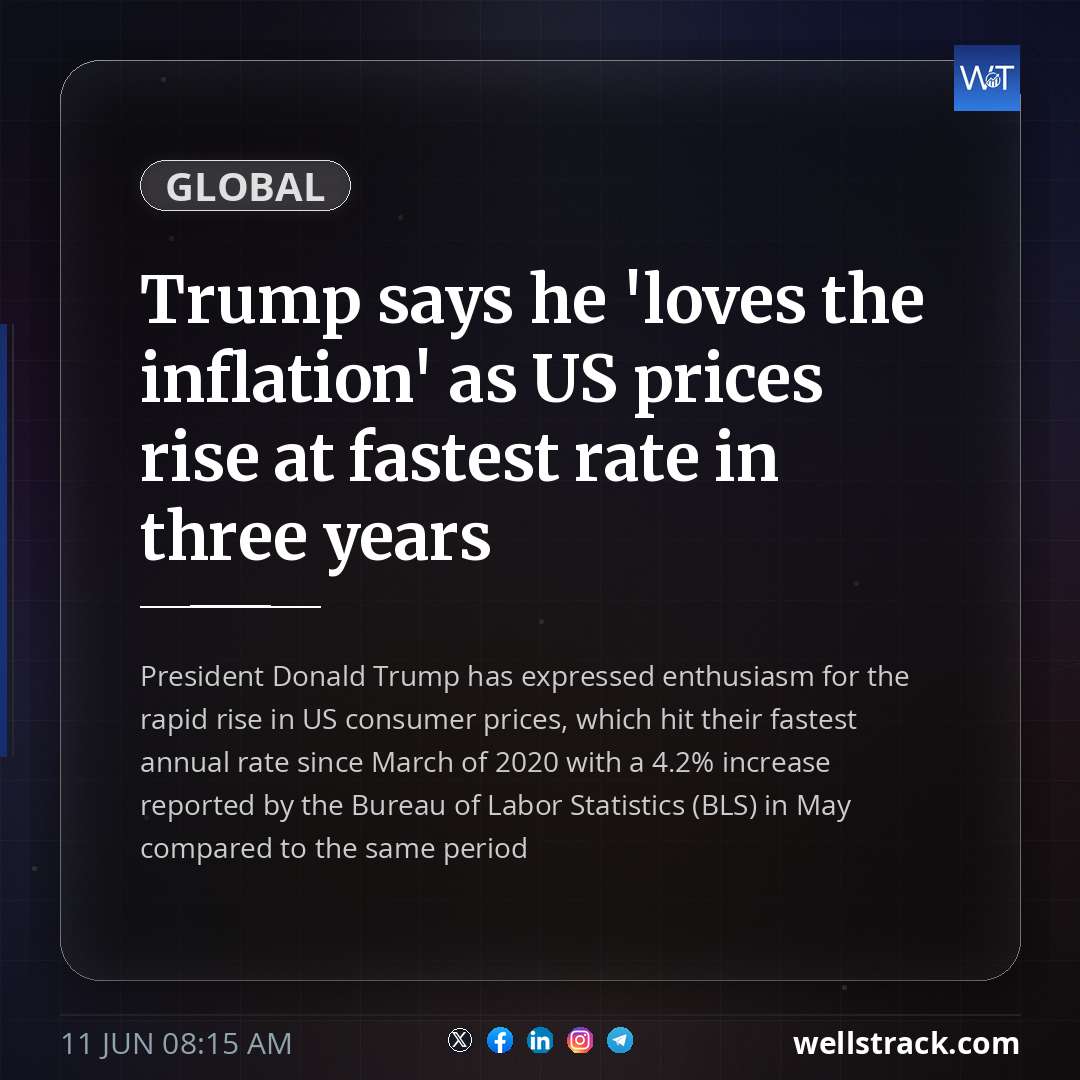
President Donald Trump has expressed enthusiasm for the rapid rise in US consumer prices, which hit their fastest annual rate since March of 2020 with a 4.2% increase reported by the Bureau of Labor Statistics (BLS) in May compared to the same period last year. The war between the United States and Iran has been cited as a primary driver for this significant inflation spike, following the US military's strike on Iranian targets near the end of April. As the conflict continues, Trump has continued to tout his support for higher prices, describing it as “great” even though he acknowledges that in the short term, rising costs have caused some issues for American consumers.
Context & Background
Historically, inflation is viewed unfavorably by most policymakers and economists due to its potential effects on economic stability. However, given the recent surge in energy prices, particularly oil-based commodities, as a result of the ongoing conflict with Iran, Trump's statement resonates within certain sectors that benefit from higher fuel costs. This development mirrors an earlier period under his predecessor, Joe Biden, where inflation reached its peak at 9.1% before starting to moderate.
The escalation in the price of petrol and other energy-related goods has significant geopolitical implications, especially given Iran's strategic position as a major oil producer. The closure of the Strait of Hormuz by Iranian forces or proxies has led to a temporary spike in global crude prices, which are currently above pre-war levels even after recent declines.
Trump’s support for inflation also reflects broader political concerns within his party. In an election year, economic issues often dominate public discourse and voter sentiment. Higher inflation can impact perceptions of a candidate's handling of the economy, especially if they have promised to combat it. The rapid increase in energy prices is a particular point of contention, as many households are directly affected by rising gasoline costs.
Additionally, Trump’s support for higher inflation could be seen as an attempt to maintain his popularity among constituents who might feel that their concerns about Iran and the global economy have been inadequately addressed. This perspective suggests that his stance may not fully align with those of more economically conservative figures within his party or in Congress.
Global Impact & Ripple Effects
The rapid rise in US inflation has far-reaching consequences not only domestically but also internationally. For countries that rely heavily on oil imports, such as Europe and Japan, higher energy prices could trigger a chain reaction of increased costs for goods and services. This can lead to broader inflationary spirals across multiple sectors, particularly if central banks do not act decisively to curb the upward trend in prices.
The Iranian conflict has also affected commodity markets globally, with Brent crude oil prices remaining elevated despite recent US military interventions aimed at weakening Iran’s economic capabilities. This situation could result in continued volatility and uncertainty for energy markets, potentially leading to further supply disruptions and price spikes.
Moreover, the ongoing war might lead to new sanctions or retaliatory actions from other countries, including potential retaliation against oil-supplying nations such as Saudi Arabia, Russia, and OPEC member states. Such developments could exacerbate geopolitical tensions and complicate efforts by global leaders to stabilize energy markets and mitigate inflationary pressures.
Lastly, the continued volatility in commodity markets and economic activity may have severe repercussions for developing economies that are heavily reliant on oil imports or trade with countries affected by sanctions and conflicts. These nations might face balance of payments challenges as their exports become less profitable due to lower demand from importing countries.
Expert Perspective & Outlook
Economists and analysts will closely monitor the trajectory of inflation moving forward, particularly in light of the ongoing Iran conflict and potential responses from global powers. The US Federal Reserve (FED) is expected to face a difficult decision regarding interest rate hikes or other measures aimed at damping inflationary pressures.
While there are indications that short-term inflation may peak as sanctions against Iran ease with time, the FED must also consider broader economic conditions and potential second-order consequences of these measures. A sustained period of high inflation could necessitate more aggressive monetary tightening to prevent a longer-lasting overheating of the economy and possible backlash in terms of political support for incumbent leaders.
The Trump administration’s endorsement of higher inflation, particularly if it persists beyond this conflict resolution phase, raises questions about its long-term viability. Continued economic instability might erode public trust in executive leadership, potentially undermining efforts to manage other critical national priorities such as diplomacy, defense, and infrastructure improvements.
Higher inflation is a double-edged sword: while beneficial for some sectors like energy producers, it can lead to broader social unrest and political challenges for policymakers.