The Story
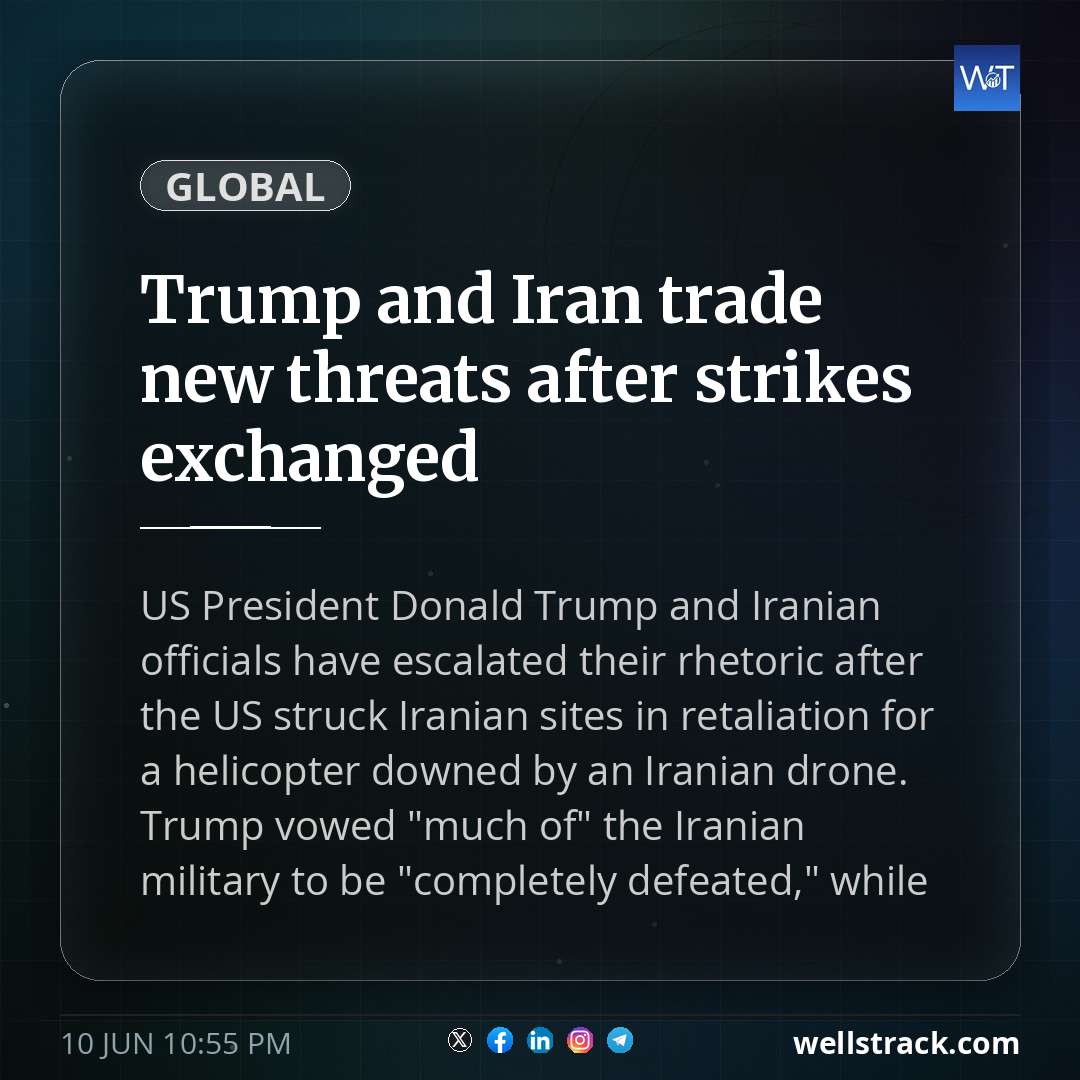
US President Donald Trump and Iranian officials have escalated their rhetoric after the US struck Iranian sites in retaliation for a helicopter downed by an Iranian drone. Trump vowed "much of" the Iranian military to be "completely defeated," while Iran's Foreign Minister Abbas Araghchi warned that it would respond "leave no attack or threat unanswered." The strikes came as the conflict between the two nations entered its third month, with US forces and facilities in the Middle East coming under renewed threat. This latest exchange of threats further strains an already fragile diplomatic landscape.
Context & Background
The ongoing conflict between the United States and Iran has roots dating back to 2015, when Iran's ballistic missile testing led to sanctions imposed by the US and its allies. In 2018, President Trump withdrew from the Joint Comprehensive Plan of Action (JCPOA), also known as the Iran nuclear deal, which had been agreed upon by Iran and six world powers in 2015. The deal restricted Iran's nuclear program in exchange for lifting economic sanctions.
These incidents, combined with ongoing maritime disputes over the Strait of Hormuz, have created a volatile atmosphere between the two countries.
More recently, tensions have risen due to US drone strikes on Iranian-backed militias in Syria and allegations of espionage involving US military contractors working with the IRGC. These incidents, combined with ongoing maritime disputes over the Strait of Hormuz, have created a volatile atmosphere between the two countries. The international community has urged both sides to de-escalate, but their mutual mistrust makes this difficult.
Stakeholders involved include not only Trump and Araghchi, but also regional powers like Saudi Arabia, Israel, and Russia, each with significant interests in the outcome of this conflict. Iran's support for Shia militias across the region has led to conflicts in Syria and Iraq, while US allies argue that Iranian-backed forces pose a threat to their own stability.
Global Impact & Ripple Effects
The latest round of threats from both sides will have far-reaching effects beyond the immediate parties involved. The Strait of Hormuz is a critical shipping route for oil, and any sustained conflict could result in increased tensions between major powers like the US and China, as they seek to secure access to this vital trade route.
For regional players, such as Saudi Arabia and Israel, who rely on stability in Iran's domestic politics, these threats may further exacerbate existing concerns. Should the conflict escalate, it could lead to increased instability and humanitarian crises across the Middle East, potentially spilling over into other regions via refugee flows or cross-border violence.
On a broader scale, this escalation could impact global energy prices and geopolitical stability as a whole. The US's continued efforts to counter Iran's influence have drawn criticism from allies like European countries, who see these measures as being overly aggressive towards an emerging power in the region. Meanwhile, Russia, which maintains strong ties with Iran through its own support for the regime, may seek to bolster its position by increasing its military presence in the area.
Expert Perspective & Outlook
The ongoing conflict between the US and Iran is deeply rooted in structural power imbalances that have persisted for decades. As tensions continue to escalate with each new round of threats, both sides must tread carefully to avoid a full-scale military engagement. The key variables determining the trajectory of this conflict include diplomatic efforts by the international community, economic sanctions on either side, and the shifting balance of power in various regional conflicts.
Best-case scenario would see both parties engaging in substantive negotiations aimed at finding a peaceful resolution. Worst-case scenario could involve extended hostilities with devastating consequences for lives already impacted by this conflict.
The US-Iran conflict is not just about one nation's actions, but the structural imbalance between great powers and their proxies in the region that has persisted for decades.