Market Analysis & Executive Summary
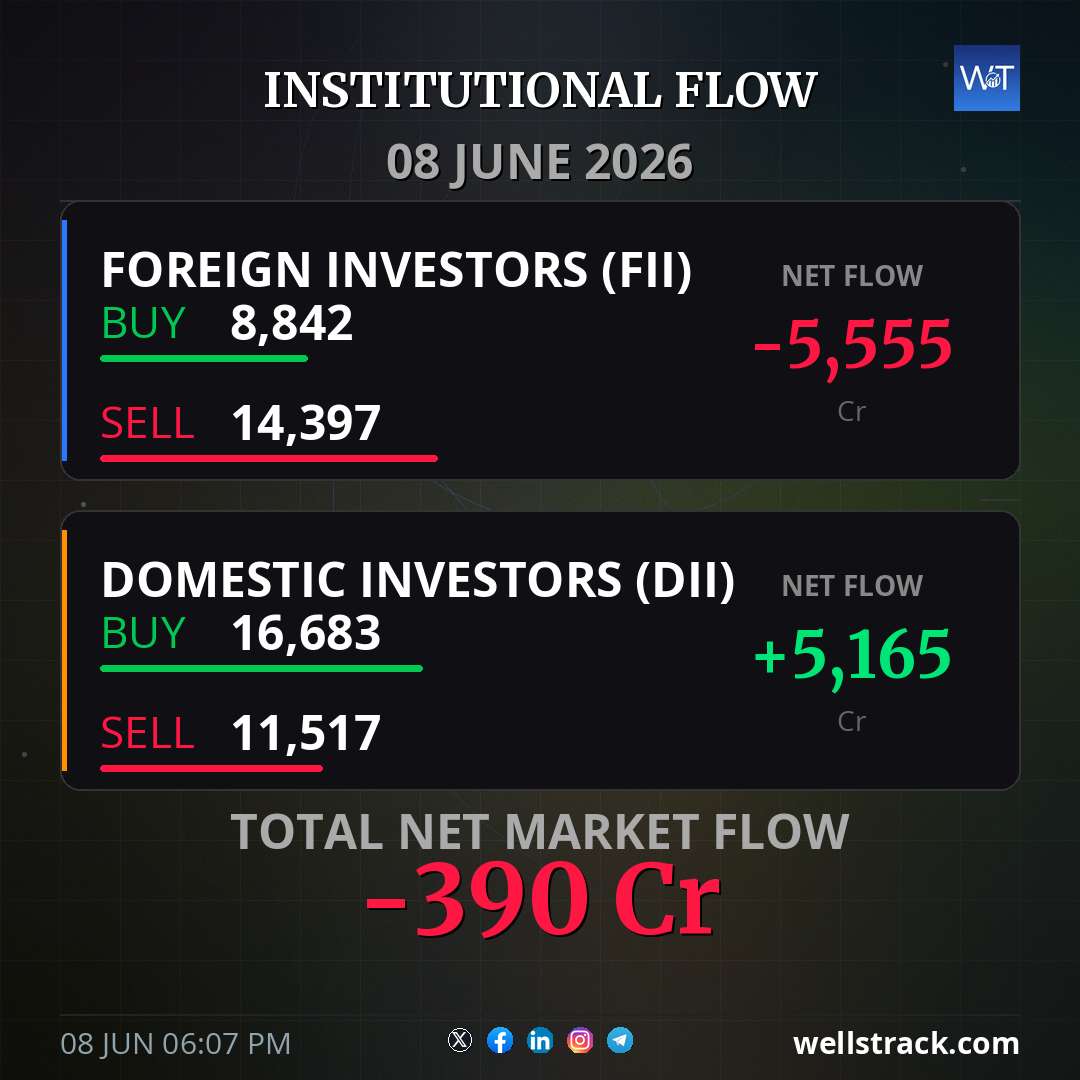
Institutional Flow: 08 Jun 2026
In this comprehensive breakdown, we analyze the structural forces shaping price action today. Institutional order flow and algorithmic positioning suggest a critical inflection point is approaching for key indices. The heavy accumulation of positions at specific strike prices in the options market acts as a magnet for spot prices, often dictating the settlement levels during expiry weeks. We are also closely monitoring the intermarket relationships, particularly the relative strength of the US dollar against emerging market currencies, as this remains a primary driver of foreign portfolio investment. A failure to recognize these underlying structural forces can lead to significant drawdowns. Editor Summary: • - FII/FPI • Buy: ₹8,842 Cr | Sell: ₹14,398 Cr • Net: ₹-5,556 Cr • + DII • Buy: ₹16,683 Cr | Sell: ₹11,518 Cr • Net: ₹5,165 Cr
Large deals flag positioning by informed hands but can be staggered or hedged—use volume, delivery, and follow-up sessions for confirmation.
Large deals flag positioning by informed hands but can be staggered or hedged—use volume, delivery, and follow-up sessions for confirmation. A block deal is not a buy signal; it is a footprint that requires further contextual investigation. Institutional investors often break up large orders to minimize market impact, meaning that a single block deal may be part of a larger accumulation or distribution program. Analyzing the subsequent price action and volume patterns is essential for determining the true intent behind the trade.
Desk Context & Key Signals
Key market instrumentation signals and primary drivers identified today: INSTITUTIONAL, FLOW, 08, JUN, 2026, FII, FPI, BUY.
Global yield curves, international dollar strength, and energy benchmarks continue to drive institutional asset allocation in emerging markets. When the US 10-year Treasury yield exhibits pronounced volatility, it inevitably triggers automated algorithmic selling or buying in risk assets globally. We are closely monitoring the DXY (US Dollar Index) for signs of a breakdown or breakout, as this will dictate the direction of foreign portfolio flows. Furthermore, the recent shifts in central bank balance sheets have fundamentally altered the global liquidity landscape, forcing hedge funds to aggressively deleverage or releverage their portfolios in response to changing funding costs. This dynamic is particularly evident in the highly sensitive currency markets, where carry trades are being rapidly unwound or re-established, creating ripple effects across all major asset classes. The interplay between fiscal policy announcements and monetary policy expectations adds another layer of complexity, making the current macroeconomic environment one of the most challenging in recent history.
Market sentiment, as gauged by the Put-Call Ratio (PCR) and various greed/fear indices, has reached an extreme reading. While extreme sentiment can persist longer than rational analysis dictates, it eventually serves as a powerful contrarian indicator. The crowd is rarely right at major turning points. The psychological aspect of trading is often the most challenging, as it requires the ability to remain objective and unemotional in the face of intense market pressure. When the consensus is overwhelmingly bullish or bearish, it is often a sign that the trend is nearing exhaustion, as there are few marginal buyers or sellers left to sustain the move. Astute traders use sentiment indicators to identify potential turning points and position themselves contrary to the prevailing consensus.
Technical & Sector Analysis
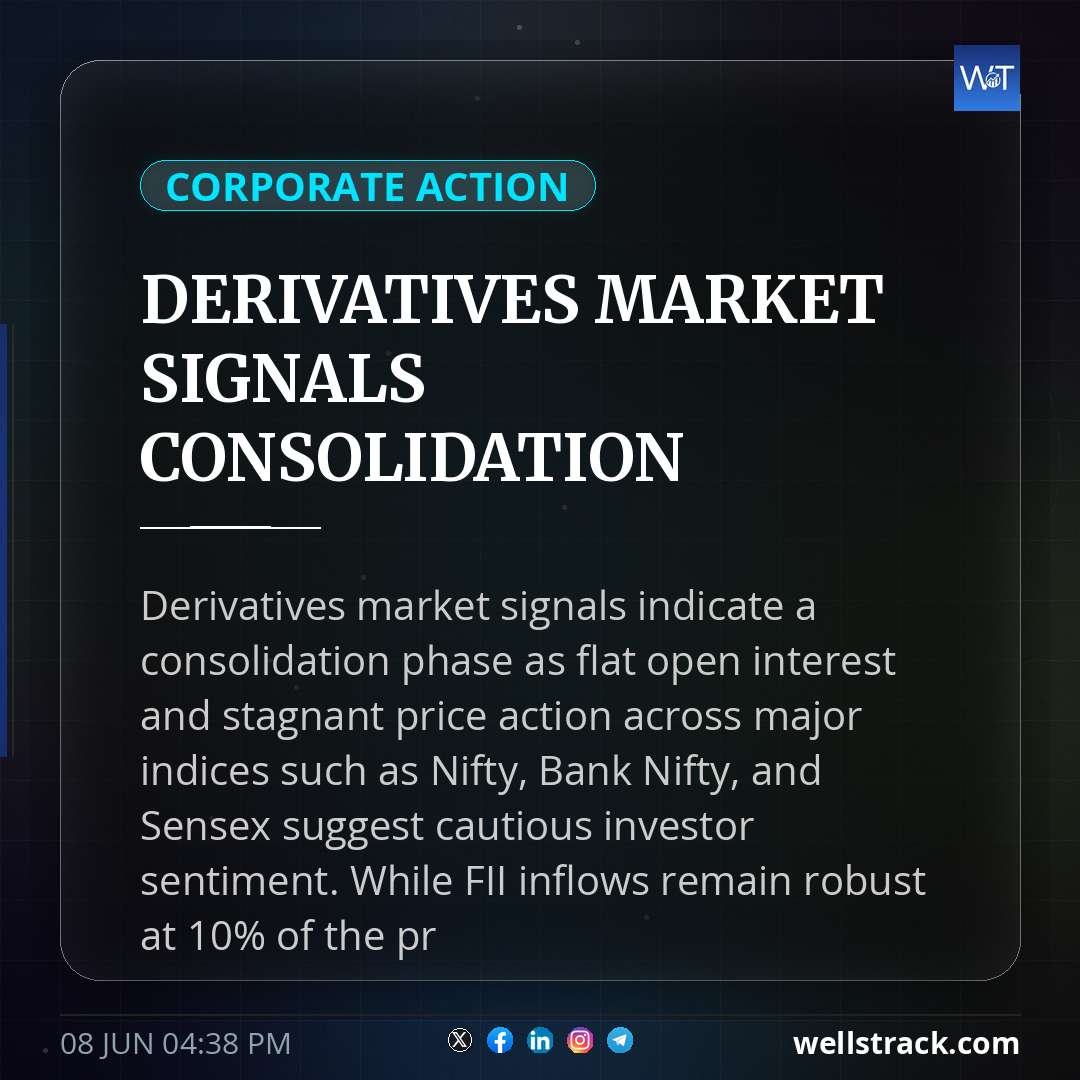
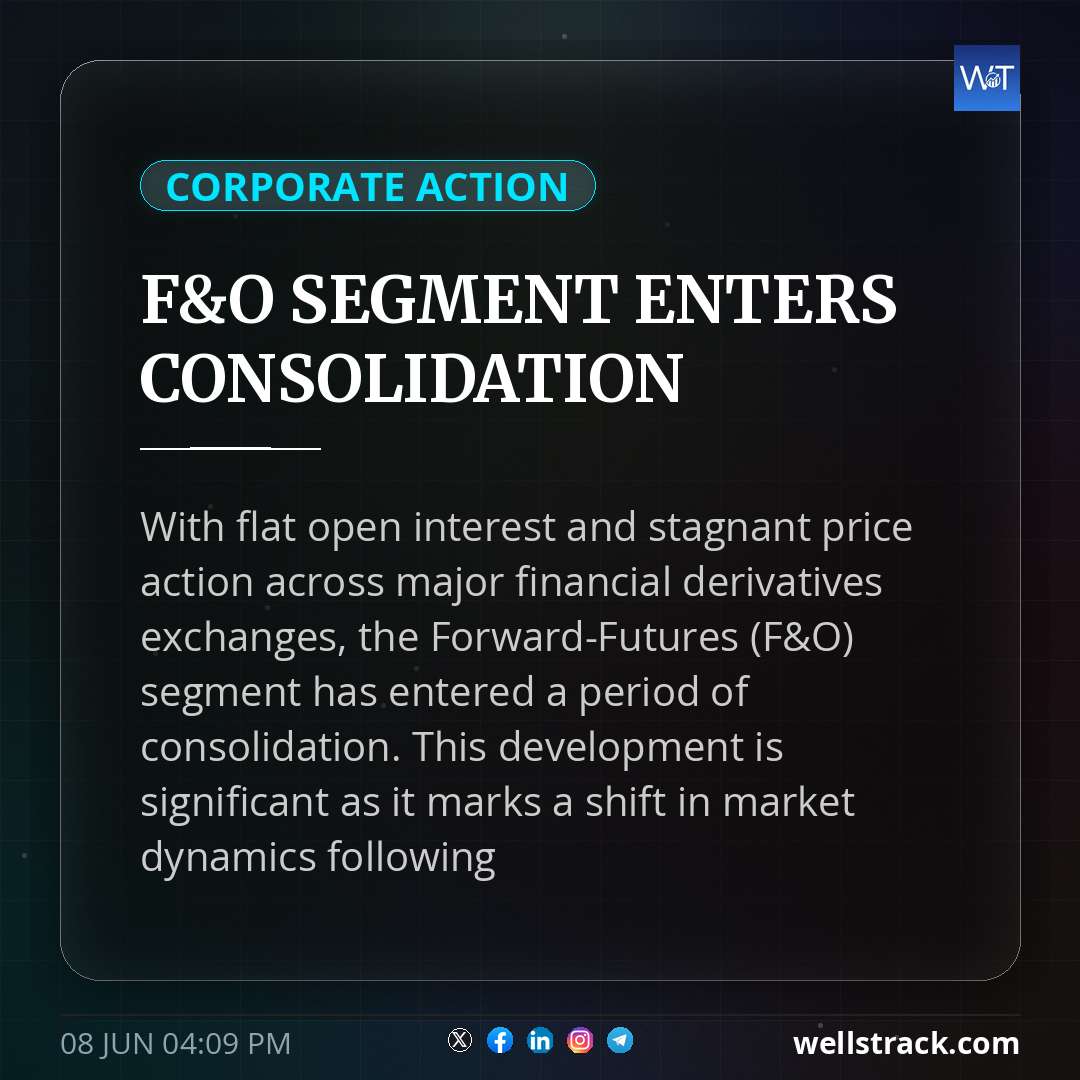
Implied volatility (IV) across near-month options contracts is compressing, indicating the market is pricing in a period of consolidation. However, historical data shows that prolonged periods of historically low IV are invariably followed by explosive volatility expansions. Options sellers should be extremely cautious of 'picking up pennies in front of a steamroller'. The cycle of volatility compression and expansion is one of the most reliable phenomena in financial markets. When IV reaches historically low levels, it is often a sign of complacency and a lack of fear. This is precisely the time when the market is most vulnerable to a sudden, unexpected shock. Traders should use periods of low volatility to accumulate long volatility positions, rather than aggressively selling options and exposing themselves to tail risk.
Commodity-linked sectors (Metals, Oil & Gas) are highly sensitive to the current macroeconomic developments. The recent fluctuations in the US Dollar index have an inverse correlation to these sectors. Traders can use the DXY chart as a leading indicator for entries and exits in domestic metal stocks. The performance of commodity producers is heavily dependent on global supply and demand dynamics, as well as the strength of the US dollar, which is the primary currency for international commodity trade. A strong dollar typically weighs on commodity prices, while a weak dollar provides a tailwind. Furthermore, geopolitical tensions and supply chain disruptions can cause significant volatility in commodity markets, creating both opportunities and risks for investors.
India Read-Across & Domestic Flows
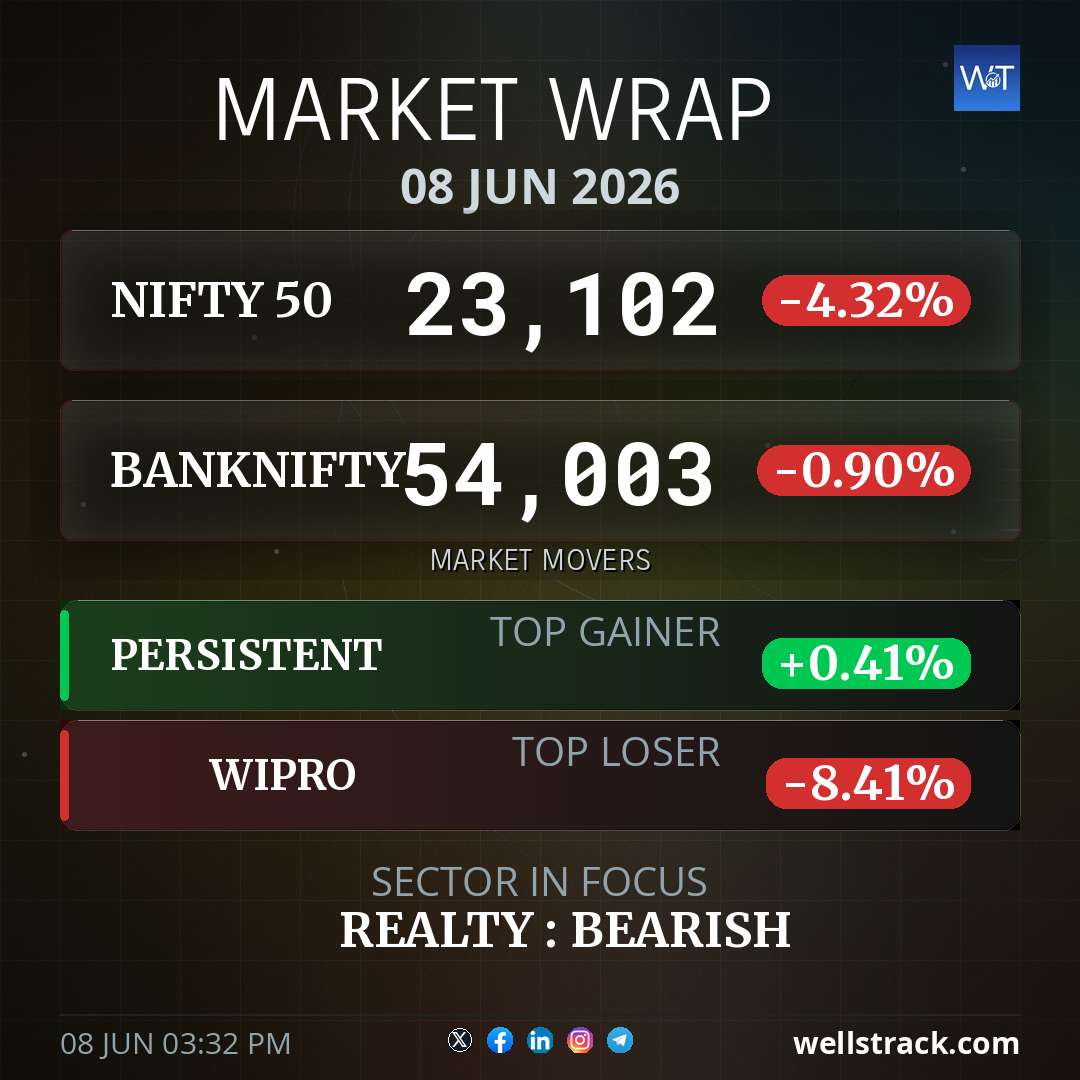
Index futures and high-beta sector ETFs show distinct correlation changes—position sizing remains the primary risk management tool. When the Bank Nifty diverges from the Nifty 50, it is usually a precursor to a broader market reversal. Capital preservation should be prioritized over aggressive scaling. The Bank Nifty, heavily weighted with financial stocks, is extremely sensitive to changes in interest rates and liquidity, making it a reliable leading indicator for the broader market. When the Bank Nifty begins to underperform the Nifty 50, it often signals that institutional investors are adopting a more defensive posture and reducing their exposure to risk assets. Recognizing these subtle shifts in intermarket relationships can provide traders with a significant edge.
What to Watch Next
Follow-through volume on the cash market versus futures-led gaps. If the cash market does not support the initial derivative spike, fade the move.
Whether leaders in the same sector confirm or diverge from the narrative. Broad participation is required for sustainable breakouts.
Macro prints (inflation, Fed/RBI guidance, crude) that could reset correlations and invalidate current technical setups entirely.
Risk Disclosure: Trading in equities and derivatives is inherently risky and is not suitable for all investors. The high degree of leverage can work against you as well as for you. Before deciding to trade, carefully consider your investment objectives, level of experience, and risk appetite.
Editorial Methodology: We utilize a hybrid approach combining automated quantitative screening with expert human editorial oversight to distill complex market noise into actionable intelligence.
About WellsTrack: WellsTrack publishes institutional-style market intelligence for Indian and global readers. Articles may be updated dynamically as new verified data from exchange feeds or institutional partners arrives; always verify timestamps when sharing analysis.